 Healing Waters Breathwork
A Parent Guide
5 Simple Breathing
Exercises for Big Feelings
A Gentle Guide to Helping Your Child Practice Calm, Confidence & Emotional Awareness
Simple, playful breathing activities you can explore together at home—one gentle breath at a time.
Created by Tanya
Healing Waters Breathwork
Helping Little Hearts Navigate Big Feelings.
Healing WatersA Note to Parents
Big Feelings Are Part of Growing Up.
Every child experiences big emotions. Sometimes those feelings show up as frustration, worry, sadness, excitement, or difficulty settling down after a busy day.
As parents, we naturally want to help our children feel safe, supported, and understood. But in the middle of an emotional moment, finding the right words—or knowing what to do—can be challenging.
That's where simple breathing activities may help.
Breathing exercises give children opportunities to slow down, notice their bodies, and practice gentle calming skills. They aren't about stopping emotions or making difficult feelings disappear. They're about helping children discover that they can pause, reconnect with themselves, and explore ways to respond to what they're feeling.
This guide introduces five playful activities you can practice together. There's no perfect way to do them. Keep things comfortable, lighthearted, and pressure-free.
Warmly,
Tanya
Healing Waters Breathwork
“Your child doesn't have to feel calm to be doing a good job. Every feeling deserves kindness.”
Parent Reminder
Healing WatersExercise 1 of 5
Smell the Flower
Best for: A gentle pause during a busy day.

Imagine holding a beautiful flower in your hands. Let's take a moment to enjoy its lovely scent.
Let's Try It Together
- Sit comfortably with your child.
- Pretend you're holding a beautiful flower.
- Gently breathe in through your nose as though smelling the flower.
- Breathe out slowly and comfortably.
- Repeat a few times if it feels pleasant.
Make It Playful
Ask your child:
- “What color is your flower?”
- “Does it smell like roses, sunshine, or something silly?”
Parent Tip
Try this exercise during a calm moment first, such as before reading a book or after playtime.
Gentle reminder: Keep the breathing natural. There's no need to take unusually deep breaths.
Healing WatersExercise 2 of 5
Balloon Belly
Best for: Noticing the connection between breathing and the body.
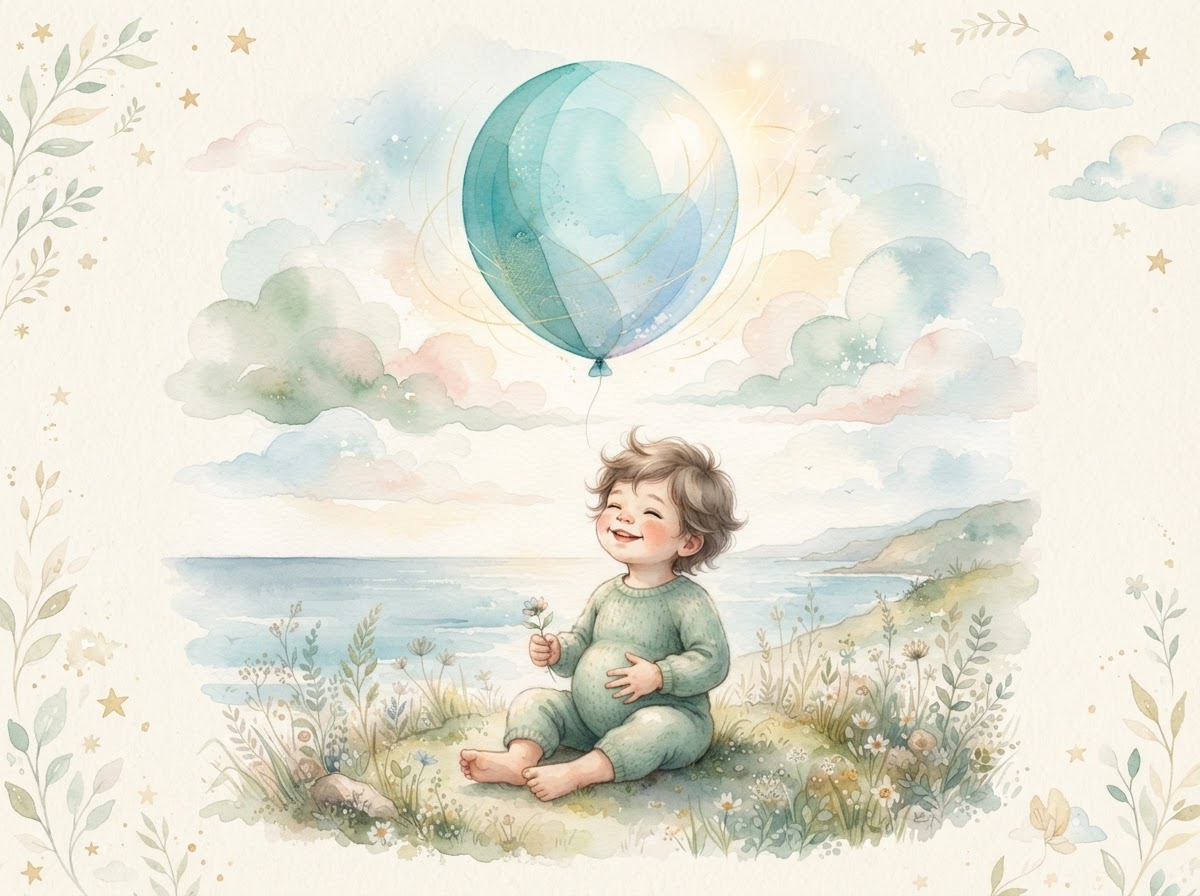
A soft pastel balloon expanding gently, with a smiling child resting a hand on their belly.
Let's Try It Together
- Find a comfortable seated or lying-down position.
- Invite your child to place a hand on their belly.
- Ask them to notice what happens when they breathe in.
- Imagine a little balloon gently growing inside the belly.
- As they breathe out, imagine the balloon becoming smaller.
- Continue for a few comfortable breaths.
Make It Playful
Ask your child:
- “What color is your balloon?”
- “Would it float up into the clouds or over the ocean?”
Parent Tip
Don't worry about how much your child's belly moves. The goal is simply to notice breathing—not to force a particular breathing pattern.
Gentle reminder: If your child feels uncomfortable or dizzy, stop the activity and return to normal breathing.
Healing WatersExercise 3 of 5
Ocean Waves
Best for: Creating a peaceful pause and practicing gentle breathing awareness.
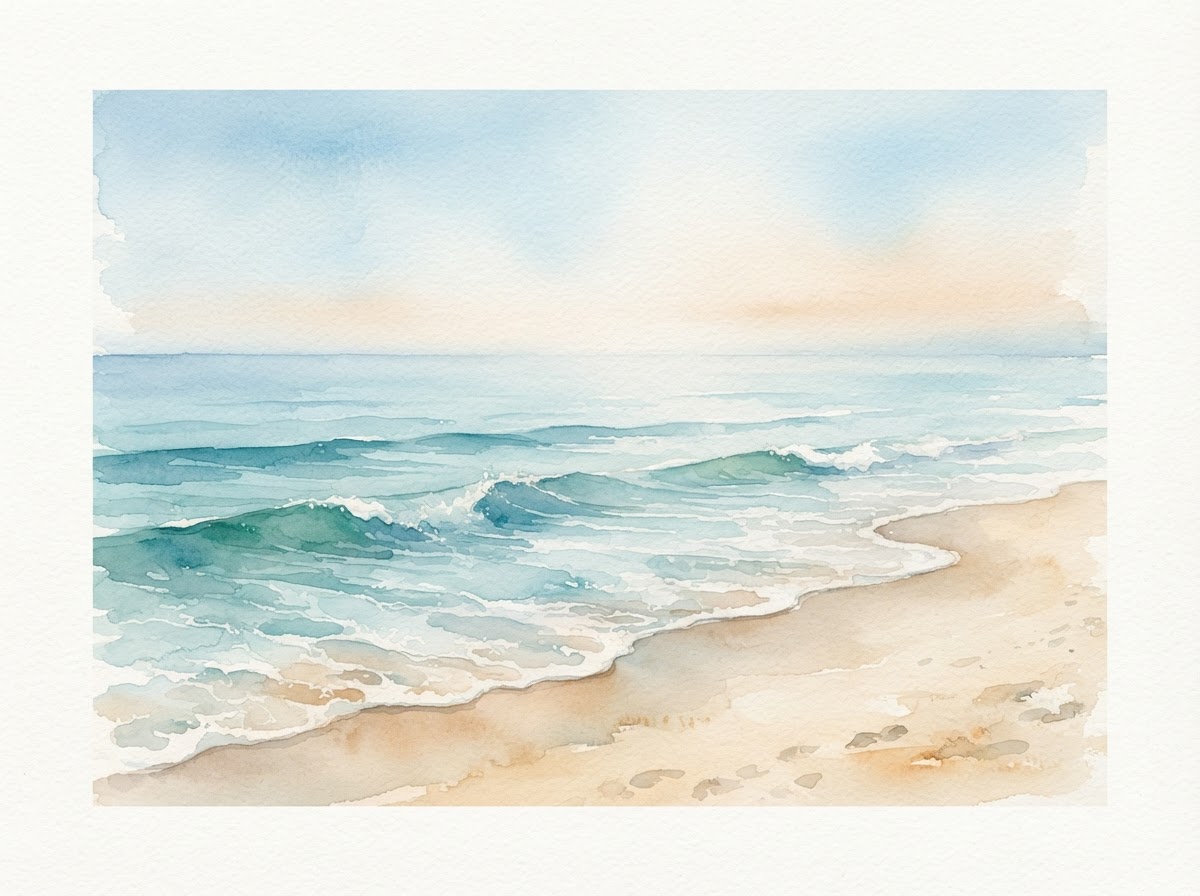
Imagine sitting beside your child on a peaceful beach, with gentle waves rolling toward the shore.
Let's Try It Together
- Sit comfortably beside your child.
- Imagine you're sitting on a peaceful beach.
- Picture a gentle wave moving toward the shore as you breathe in.
- As you breathe out, imagine the wave slowly returning to the ocean.
- Continue at a natural, comfortable pace.
Make It Playful
Ask your child:
- “What color is the ocean today?”
- “Can you imagine the sound of the waves?”
- “What would your perfect peaceful beach look like?”
Parent Tip
You can use quiet ocean sounds during this exercise if your child enjoys them.
Gentle reminder: Let the breath follow its own comfortable rhythm. There's no need to hold your breath or follow strict timing.
“Just like ocean waves, our feelings can come and go.”
Healing WatersExercise 4 of 5
Bunny Breaths
Best for: A quick, playful moment of breathing awareness.
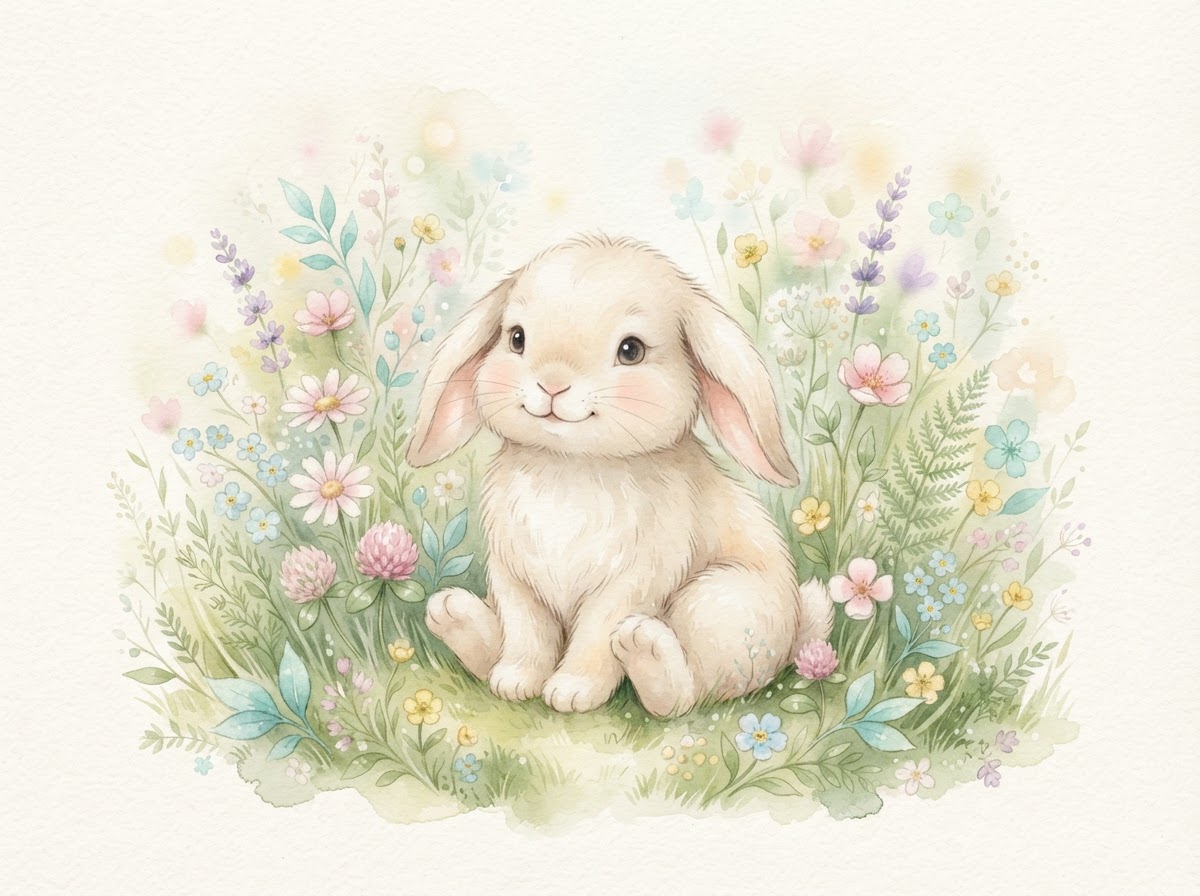
Imagine you're a little bunny exploring a garden, noticing a beautiful flower nearby.
Let's Try It Together
- Sit comfortably with your child.
- Imagine you're a little bunny exploring a garden.
- Pretend you notice a beautiful flower.
- Take one gentle sniff through your nose.
- Let your breath flow out softly and naturally.
- Pause and repeat if your child wants to.
Make It Playful
Ask your child:
- “What does your bunny smell?”
- “Is your bunny exploring a flower garden or a magical forest?”
Parent Tip
This activity can be especially engaging for younger children who enjoy pretend play.
Gentle reminder: Use one soft sniff at a time. Avoid rapid or repeated forceful sniffing.
Healing WatersExercise 5 of 5
Star Breathing
Best for: Combining gentle movement, attention, and breathing awareness.

A large, beautiful five-point star with a soft teal outline and subtle golden accents. Trace it slowly with your finger as you breathe.
Let's Try It Together
- Hold up one hand or look at the illustrated star.
- Place a finger at one point of the star.
- Slowly trace along the outline.
- Notice your breathing as your finger moves.
- Continue tracing at a comfortable pace.
- Stop whenever you're ready.
Make It Playful
Ask your child:
- “Can you imagine your star glowing in the night sky?”
- “What would you wish for on your star?”
Parent Tip
Some children enjoy tracing a star with their finger, while others prefer drawing one on paper. Both are wonderful ways to participate.
Gentle reminder: Breathe naturally. Do not require breath-holding or specific inhale/exhale counts.
Healing WatersA Gentle Closing
Every Big Feeling Deserves a Little Understanding.
Learning to navigate emotions takes time, patience, and practice. Some days, your child may enjoy breathing exercises. Other days, they may need a hug, a conversation, some movement, or simply your presence. That's okay.
These five activities are tools—not rules. The most important thing is creating opportunities for your child to feel supported, understood, and safe as they grow.
Meet Tanya
Tanya is the founder of Healing Waters Breathwork and a breathwork coach trained through Breath of Gold. She is passionate about helping children explore gentle breathing practices and develop greater emotional awareness through playful, supportive experiences. Her approach emphasizes patience, compassion, and meeting each child where they are.
Want More Personalized Guidance?
If you'd like to explore how breathwork coaching might support your child, Tanya would love to connect.
Book Your Free Parent Consultation — visit healingwatersbreathwork.com
Editable app linkHelping Little Hearts Navigate Big Feelings.
Healing Waters Breathwork
Important Wellness Notice: These exercises are intended for general education and family wellness. They are not medical or mental-health treatment and are not a substitute for professional care. Children should participate with a parent or trusted adult. Breathing should remain gentle, comfortable, and unforced. Stop if an activity causes dizziness, discomfort, or distress.